Showing posts with label Best Of India. Show all posts

Sunday, April 15, 2012

Best Of Indian : Agni-V Missile Test

India's most-ambitious nuclear missile, Agni-V, which classifies as an ICBM (intercontinental ballistic missile) with a strike range of over 5,000-km, will be tested in mid-April, he said.

The three-stage Agni-V, with its advanced ring-laser gyros, composite rocket motors and highly accurate micro-navigation systems, comes close to the top American missiles in terms of technology, said Saraswat.
India will break into the exclusive ICBM club that counts just US, Russia, China, France and UK as its members, once the 50-tonne Agni-V is ready for induction by 2014-2015. The solid-fuelled missile, with a canister-launch system to impart greater operational flexibility, is crucial for India's nuclear deterrence posture since its strike envelope will be able to cover the whole of China.

Concurrently, said Saraswat, "The K-15 SLBM is now getting ready for the final phase of induction after its two recent tests (from submersible pontoons) were successful...We have done over 10 flights of it so far."
The 750-km-range K-15, followed by the 3,500-km K-4, will arm India's homegrown nuclear submarines. INS Arihant, which is undergoing trials now, for instance, has four silos on its hump to carry either 12 K-15s or four K-4s to complete India's long quest for "an operational nuclear weapon triad".

As for the two-tier ballistic missile defence (BMD) system, designed to track and destroy incoming hostile missiles both inside (endo) and outside (exo) the earth's atmosphere, Saraswat said its Phase-I would be completed by 2013 and Phase-II by 2016. "We will test the exo-atmospheric interceptor at 150-km altitude this year, which will be followed by an endo-atmospheric test at 30-km altitude," he said.
With the Capital identified as the first city to get its protection, DRDO has also begun work to add a third tier to the BMD system to intercept cruise missiles, artillery projectiles and the like at lower altitudes, in the line with the overall aim to achieve "near 100% kill or interception probability".

DRDO is now also focusing on "space security", with special emphasis on protecting the country's space assets from electronic, or physical destruction by "direct-ascent" missiles, in the backdrop of China developing advanced ASAT (anti-satellite) capabilities.

Work is also in progress to develop several directed energy weapons (DEWs), including a 25-kilowatt laser system to destroy incoming missiles in their terminal stage and a 100-kilowatt solid-state laser system to take out missiles in their boost phase itself.

"We also need to build the capability to provide launch-on-demand mini or micro satellites to our armed forces for communication and navigation facilities (in the event the country's satellites being destroyed by an enemy)," said the DRDO chief.

Monday, August 22, 2011

Best Of India : Vijay Salaskar


Vijay Salaskar
VijaySalaskar.jpg
Anti-Extortion Cell, Mumbai
Nickname Encounter Specialist
Place of death Mumbai, Maharashtra, India
Service branch Maharashtra Police Service officer
Years of service 25 years
Rank Head of Anti-Extortion Cell
Awards Ashoka Chakra
Relations Hemlata Salaskar (Mother), Smita Salaskar (Wife)
 

 Vijay Salaskar (Marathi: विजय साळसकर) was a Senior Police Inspector and encounter specialist serving with the Mumbai police. He was widely credited with killing 75–80 criminals in encounters — most of these were members of the Arun Gawli gang.. Salaskar was killed while fighting terrorists in the November 2008 Mumbai attacks. Captured terrorist Ajmal Amir Kasab claimed responsibility for the killing. Before his death Salaskar was head of the Anti-Extortion Cell, Mumbai. His patriotism and bravery was honoured with the Ashoka Chakra on 26 January 2009.


Early life and career

Salaskar was a post-graduate in Commerce (M.Com) from Mumbai University. He joined Mumbai police as a sub inspector in 1983. India Today reports Salaskar's first lethal encounter occurred during his first year of appointment, when he shot dead Raja Shahabuddin, known to police on several counts.Salaskar, who was reportedly sidelined for the last two years for unearthing the gutka-underworld nexus, was recently attached to the crime branch, where he headed the anti-extortion cell. An officer of the 1983 batch, Salaskar in his 24 years of service had eliminated many criminals. Amar Naik, Jaggu Shetty, Sadhu Shetty, Kundan Singh Rawat, Zahoor Makhanda are some of the gangsters who have fallen to Salaskar’s bullets. According to sources, the police officer had once even gone hunting for former don Arun Gawli. “But Gawli fled from the scene, forcing Salaskar to return empty-handed. However, Salaskar got even by killing his two trusted men, Sada Pawle and Vijay Tandel, in 1997, triggering allegations that the encounters were fake. After this, Gawli was so scared that during the 2005 elections, he complained to the government that Salaskar was trying to kill him and requested that he be transferred,’’ sources said.
This is what Salaskar said in 2004 about Gawli." Gawli may have become an MLA. But for me, he continues to remain a former Mumbai don and I have to keep tabs on his activities. If I get any information of his group's involvement in a crime or learn about any shady activity going on at Dagdi Chawl, I will not hesitate to raid his Byculla residence. If I have to arrest him, I will not refrain from doing so. Now that Gawli is an MLA, arresting him will involve certain procedures. I will not bow to any political pressure. I will only take orders from the police commissioner, who is my supreme commander. It was embarrassing that khaki-clad policemen would be deployed to protect Gawli. In the past, we refused him police protection on several occasions. At that time, I had gunned down several of his top henchmen and so he was scared of me. But if Gawli is really reformed, he should not be afraid of me or any other policeman. We do not target innocent persons."


Death

Vijay Salaskar was killed in action by terrorists during the Mumbai attacks, on 26 November 2008.
India Express quotes statements by Constable Arun Jadhav, who was with the officers Vijay Salaskar, Ashok Kamte and Hemant Karkare when they died. The three officers and four constables had received information that Sadanand Date had been wounded while resisting hostile terrorist action at the Cama and Albless Hospital for women and children. Currently located at Chhatrapati Shivaji Terminus (CST), a ten-minute drive from the hospital, they took a Toyota Qualis and proceeded in that direction. Salaskar was driving, Ashok Kamte in the passenger seat, Hemant Karkare in the second row, and the four Constables, including Jadhav, were in the back row of seating. According to Jadhav, five minutes later two terrorists stepped out from behind a tree and opened fire with AK-47 automatic rifles. The six policemen, other than Jadhav, were all killed quickly in the gunfire. The wounded Jadhav had no opportunity to render assistance. The two terrorists approached the vehicle, dumped the bodies of the three officers on the road and, leaving the constables for dead, proceeded to Metro Junction. Upon arrival, they aimed three bursts of automatic fire at police and journalist vehicles drawn up at that location, then drove off towards the government offices (Vidhan Bhawan) in South Mumbai. Here again they fired several times. While attempting to leave the area, one of the tyres of the vehicle burst, so the terrorists departed to obtain another. At this point, Jadhav was able to contact headquarters. The bodies of the dead were promptly recovered and taken to St George Hospital.

Best Of India : Sandeep Unnikrishnan , MVC


Major Sandeep Unnikrishnan, AC
15 March 1977(1977-03-15) – 28 November 2008(2008-11-28) (aged 31)
Sandeep Unnikrishnan.jpg
Place of birth Kozhikode, Kerala
Place of death Mumbai, Maharashtra
Cremation Hebbal, Bangalore, Karnataka
Allegiance India India
Service/branch Indian Army, National Security Guards
Years of service 1999-2008
Rank Major, Commando
Unit NSG HQ, Manesar
Awards Ashoka Chakra     


Sandeep Unnikrishnan (Malayalam: സന്ദീപ് ഉണ്ണിക്കൃഷ്ണന്‍, 15 March 1977 – 28 November 2008) was a Major in the Indian Army serving in the elite Special Action Group of the National Security Guards (NSG). He was killed in action while fighting terrorists in the November 2008 Mumbai attacks. His bravery was honoured with the Ashoka Chakra, India's highest peace time gallantry award, on 26 January 2009.
“Do not come up, I will handle them”, were the last words which Major Unnikrishnan told his men as he was hit by bullets while engaging well armed terrorists inside the Taj Mahal Palace & Tower during Operation Black Tornado, according to NSG officials.
Later, NSG sources clarified that when a Guardsman got injured during the operation, Major Unnikrishnan arranged for his evacuation and started chasing the terrorists himself. The terrorists escaped to another floor of the hotel and during the chase Major Unnikrishnan was seriously injured and succumbed to his injuries.[3]

Family

Sandeep Unnikrishnan hails from a Malayali Nair family residing in Bangalore, where they had moved to from Cheruvannur, Kozhikode District, Kerala. He was the only son of retired ISRO officer K. Unnikrishnan and Dhanalakshmi Unnikrishnan.

Childhood

Major Unnikrishnan spent 14 years at the Frank Anthony Public School, Bangalore, graduating in 1995 in the ISC Science stream. A popular figure among his contemporaries, he wanted to join the Army, even attending school in a crew cut to show his dedication to his dream. His peers and teachers recalled him as being good athlete, becoming active in school activities and sports events. Most of his athletic records in school remained unbroken for years after his leaving the school. He described himself as a movie maniac in his orkut profile. Besides his display of courage from a young age he had a soft side to him and was a member of the school choir.

Army career

Sandeep joined the National Defence Academy (NDA), Pune, Maharashtra in 1995. He was a cadet, part of the Oscar Squadron (No. 4 Battalion) and a graduate of the 94th Course of NDA. He graduated as a Bachelor of Arts (Social science stream).
His NDA friends remember him as "selfless", "generous" and "calm and composed".
In 1995, we were a bunch of gangly 18-year-olds, wondering what the hell we were doing climbing up Sinhgad fort on a miserable, rainy day, when I first met Unni. He was an ikki, a first termer, bone-weary, but always gung-ho. When we made it to the top, the first stop was for a fill of water. Soggy, bushed and thirsty, we ran to the natural spring that has been feeding soldiers since the days of Chhatrapati Shivaji. Unni was the first to reach and started drawing water from the well. We lined up with our canteens, but a tourist first held out her water bottle. Unni filled it. Then, another. Unni filled that too. Within seconds, there was a long line of tourists waiting for water. Without a word - and with a smile to us - Unni dutifully doled out his generosity. He never got to us. He himself never got a sip. The order came to move on.
— An NDA coursemate
His happy-go-lucky face masked a ruthless and determined soldier, so did his thin physique hide a tough, never-give-up spirit that was seen in various training camps and cross country races he participated in with in the NDA.
He was commissioned as Lieutenant to the 7th Battalion of the Bihar Regiment (Infantry) on 12 July 1999. After serving the Indian Army in different locations in Jammu & Kashmir and Rajasthan to counter insurgencies for two terms, he was selected to join the National Security Guards. On completion of training, he was assigned to the Special Action Group (SAG) of NSG on January 2007 and participated in various operations of the NSG. He was a popular officer who was loved and adored by his seniors and juniors alike. During the 'Ghatak course' (at the Commando Wing (Infantry School), Belgaum), the most difficult course of the Army, Major Unnikrishnan topped the course, earning an "Instructor Grading" and commendation from seniors. Perhaps this was the reason or his passion for bravery that he opted for the NSG commando service which he joined on deputation in 2006.
During Operation Vijay in July 1999 he showed grit and determination at the forward posts in the face of heavy artillery firing and small arms fire by Pakistan troops. On the evening of 31 December 1999, Major Sandeep led a team of six soldiers and managed to establish a post 200 metres from the enemy and under direct enemy observation and fire.

Operation Black Tornado

On the night of 26 Nov 2008, several iconic buildings in South Mumbai were attacked by terrorists. One of the buildings where the terrorists held people hostage was the 100-year old Taj Mahal Palace Hotel. Major Unnikrishnan was the team commander of 51 SAG deployed in the operation at the Taj Mahal Hotel to rid the building of terrorists and rescue the hostages. He entered the hotel in a group of 10 commandos and reached the sixth floor through the staircase. As the team descended the stairs, they sensed the terrorists on the third floor. The terrorists had held a few women as hostages in a room and locked it from the inside. After breaking open the door, the round of fire by the terrorists hit Commando Sunil Yadav, who was Major Unnikrishnan's partner.


Major Unnikrishan led his team from the front and engaged the terrorists in a fierce gunfight. He arranged for Commando Sunil Yadav's evacuation and regardless of personal safety, chased the terrorists who, meanwhile, escaped to another floor of the hotel, and while doing so Major Sandeep continuously engaged them. In the encounter that followed, he was shot from the back, seriously injured and succumbed to injuries.

Funeral

At Unnikrishnan's funeral, mourners shouted “Long Live Major Sandeep Unnikrishnan“, “Sandeep Unnikrishnan Amar Rahee”. Thousands lined up outside the Bangalore house of the NSG Commando Major Sandeep Unnikrishnan as thousands lined up to pay their respects. The funeral of Major Sandeep Unnikrishnan was held with full military honours.

Controversy

Nobody represented the Kerala government in Major Unnikrishnan's funeral. Local and national media criticized the decision of the politicians. However the Chief Minister of Kerala V. S. Achuthanandan and Home Minister Kodiyeri Balakrishnan called on the Unnikrishnan's family on 30 November 2008. Sandeep's father K. Unnikrishnan was angry, criticized the visit and asked them to leave. He even threatened to commit suicide if any politician from Kerala entered his home. Later, V. S. Achuthanandan told media that had it not been for Major Sandeep Unnikrishnan, not even a dog would have visited his parents' house. This again invited harsh criticism from the media and public. However, Achuthanandan stated that he would not apologize to the Major's family. He added that he respects the slain Major's family.
On 2 December 2008, Communist Party of India (Marxist) General Secretary Prakash Karat expressed his apology for Achuthanandan's 'dog remark'. On 3 December 2008, Achuthanandan expressed his regrets over the incident.

Best Of India : Captain Vikram Batra , PVC


The soldier who became a legend
Reportage: Archana Masih. Photographs: Rediff Archives and the Batra family. Design: Dominic Xavier, Rajesh Karkera
Lieutenant Vikram Batra had to complete his mission successfully.
Pakistani invaders had taken positions in bunkers at a height of 17,000 feet on Peak 5140 in Jammu and Kashmir. Lieutenant Batra and Captain Sanjeev Jamwal -- both from the Kangra valley in Himachal Pradesh -- were ordered to recapture the peak on the night of June 19, 1999, about five weeks after the Kargil war began.
The operation was much too dangerous to be carried out during the day.
Aware of the enemy's vantage point, Lt Batra -- who was later promoted to captain on the battlefield -- decided to attack the enemy from the rear.
Peak 5140, the highest point on the Tololing Ridge, was one of the most arduous and crucial peaks in the Drass region. If it fell, it would clear the Pakistanis from that sector and pave the way for further victories.
He knew they had to win.
Captain Vikram Batra in the Drass sector
It was dark and cold. The men crawled, quietly. Batra, who had earned an instructor's grade as a commando, was determined not to lose any men.
He was deeply upset when a terrorist's bullet meant for him had struck his man behind him during his first posting in the terrorist-prone region of Sopore in Jammu and Kashmir.
'Didi, it was meant for me and I lost my man,' he had told his elder sister over the phone.
But tonight his guide was the framed motto of the Indian Military Academy, Dehra Dun, that he had brought home to Palampur, Himachal Pradesh, at the end of his training.
The safety, honor and welfare of your country come first always and everytime.
The honor, welfare and comfort of the men you command come next.
Your own ease, comfort and safety come last, always and everytime.
The motto had been molded into his heart as a Gentleman Cadet. There was no better time to live by it than now -- when India was at war and he, in his first major battle.
24-year-old Vikram and his men assaulted the enemy.
The camp was routed, many enemy soldiers killed and 13 J&K Rifles won a decisive victory.
All his men had made it alive.
Vikram was elated. 'Yeh Dil Maangey More' -- the Pepsi catchline those days -- he told his commander at base camp.
His words became the catchline for the Kargil war.
Vikram Batra had led a brilliant operation in one of India's toughest campaigns in mountain warfare. His men swore by him. General Ved Prakash Malik, then the Chief of the Army Staff, called to congratulate him. His triumph was being beamed from television screens across the country.
Photographs of him and his men striding the captured Pakistani gun at the base camp made it to every newspaper.
In a time of war, he became the face of the young Indian soldier who fought ferociously and died fearlessly.
His code name was Sher Shah.
The other soldier India knew with the same name had lived in the Middle Ages and was called 'The Lion King.' Sher Shah Suri was an accomplished commander who defeated the Mughal emperor Humayun and sat on the throne of Delhi for five years.
Vikram Batra was the hero of the nation. Two weeks after his conquest of 5140, people would remember him as the Lion of Kargil.
Daddy, I've captured.'
G L Batra can never forget that phone call that June morning. Vikram's voice was cracking through the satellite phone. He was talking too fast and wasn't clear at all.
For a moment, he thought his son was captured. But the school principal knew it was preposterous to think that he would be allowed to call his parents if he were a prisoner of war. Yet he was frightened and asked Vikram to speak clearly.
'Oh Daddy, I've captured the enemy's post. I'm OK, I'm OK.'
'Bete [son], I'm proud of you,' replied Mr Batra, 'may God bless you to carry on your task there.'
It was the happiest moment of his life. He had named his son 'Vikram' because the name spelled character and strength and he had lived up to it.
It was the morning of June 20, 1999. Through the previous night Vikram had commanded a daring operation and his father reveled in his accomplishment.
The capture of 5140 would finally lead to the decisive fall of Tiger Hill, and to India's eventual victory.
Nine days later, Vikram called from base camp. He was leaving for another crucial operation.
He never called again.
G L Batra in the office at the petrol pump awarded by the government in Vikram's honour
G L Batra and his wife Kamal saw glimpses of their son on television. He looked different with his beard and camouflaged jacket.
Like always, he was brimming with confidence and his spirit was soaring.
Like always, that smile never left his face.
Mrs Batra's heart had lurched when Vikram called to tell her that his unit was being sent to the Kargil front.
The last war India had fought was in 1971, three years before Vikram and his twin, Vishal, were born. He was just 24, had served in the Indian Army for only 18 months -- what if…
She quickly pushed that thought out of her mind. If all mothers were to think that their children shouldn't join the army, who would protect this vast nation?
When she heard that he had captured his first peak it was as if she had won.
She had lived most of her life in the lap of the Dhauladhar mountains in Palampur. She saw the mountains each day and knew them as invincible. Now her son was telling her that he had captured a perilous peak like the Dhauladhar, maybe even higher.
She felt proud like only a mother could be.
G L and Kamal Batra at their home in Palampur
Vikram you are going for another crucial operation, what are your thoughts at this moment?'
Mr Batra watched his son on the evening news when the television reporter questioned him at the base camp.
Over the past few days, the school principal had tried to catch a glimpse of his son after he came home every day. But that day something about Vikram left him uneasy.
'I wish the families of the deceased soldiers are looked after well by the government and society,' Vikram replied and turned his face from the camera.
Sitting in his home, hundreds of miles away, Mr Batra read the facial expressions of his son and instantly knew what was going on in his mind.
Vikram doubted his return, Mr Batra thought.
This time, the father turned away from the television screen and broke down.
His wife asked him why he had suddenly become so sad. He did not have the courage to tell her what he felt.
At that moment he knew their son wasn't coming back.
Kamal Batra with a picture of Vikram. His cap and the Indian flag that had wrapped his body is kept in front.
The last time Vikram was home with his family in Palampur was during the Holi festival in 1999.
He had got leave for a few days and his mother pampered him with the goodies he liked best -- pakodas, home made potato chips and mango pickle.
Like the ritual he followed on each visit, he went to the Neugal Café, a Palampur eatery by the Neugal river, for a coffee and met an acquaintance who spoke about the war.
'The war has begun, who knows when you will be asked to go, you better be careful.'
'Don't worry, Vikram told him,' remembers Mr Batra, 'I'll either come back after raising the Indian flag in victory or return wrapped in it.'
Before Mr and Mrs Batra knew, Vikram's holiday was over and they were at the bus stop seeing him off. The mango pickle and potato chips were packed in his bag for him and his friends in Sopore.
His unit had received orders to move to Shahjahanpur in Uttar Pradesh but the war altered their deployment and Vikram was deputed to report for duty in Kargil on June 1, 1999.
He informed his parents, asked them not to worry and called them at least once in ten days. He made his last phone call on June 29.
He asked about everyone in the family. His elder sisters Neetudidi and Seemadidi. His twin, whom he fondly called 'Kushli.'
She was relieved to hear Vikram say: 'Mommy, ek dum fit hoon, fikar mat karna [I'm absolutely fine. Don't you worry.]
That was the last time he spoke to her.
Vikram Batra would have joined the Merchant Navy. He was to join the ship in Hong Kong. His uniform had been stitched, his tickets booked.
But he changed his mind.
A decade later, his decision would become the opening line of an Indian Oil print campaign. The public sector company paid tribute to the Kargil hero and lauded him for rejecting a lucrative career for the service of the nation.
'Sometimes an ordinary Indian can make a Rs 120,000 crore company feel humble. For every step we take, there's an inspired Indian leading the way,' read the ad copy, alongside a black-and-white etching of Captain Batra.
A framed picture of the text hangs in the petrol pump awarded in his honour to his parents. The advertising agency also sent the etching, which Mr Batra has kept carefully.
On the wall on the other side is a photo-copy of a magazine feature commemorating 'The Lives and Good Times of a Country.' Vikram heads the list of heroes.
In one entrance test for the Indian Administrative Service, says Mrs Batra, one of the questions was -- 'Name the peaks captured by Captain Vikram Batra?'
"It is very rare and our good fortune that we were given a son like him who put the country first."


Click for bigger image
A fortnight after he became the face of the Indian soldier in the Kargil war, Vikram Batra died. He was mortally wounded on the morning of July 8 after fighting through the night while recapturing Peak 4875. He was ill but had insisted that he was fit for the mission and completed it in a manner that put him alongside some of India's greatest military heroes.
Vikram with his men had begun a tortuous climb to strengthen the flanks of the Indian troops fighting the invaders at 16,000 feet.
The conditions were extremely tough. At a gradient of 80 degrees, the thick fog made the advance even more precarious.
The enemy got wind of Batra's arrival. They knew who Sher Shah was, by now his military prowess had become the stuff of legend.
Vikram with another young officer, Anuj Nayyar, fought the enemy's counter-attack ferociously.
They cleared enemy bunkers, egged their men forward, engaged in a hand-to-hand combat and forced the Pakistani retreat.
The mission was almost over when Vikram ran out of the bunker to rescue another junior officer who had injured his legs in an explosion.
"His subedar begged him not to go and said he would go instead," says his father, "but Vikram told him: 'Tu baal-bacchedar hain, hat ja peeche. [You have children, step aside]"
He lunged forward to save the young lieutenant, when a bullet pierced through his chest.
By the morning India won back Peak 4875 but lost Vikram Batra.
For his sustained display of the most conspicuous personal bravery and leadership of the highest order in the face of the enemy, he was awarded India's highest decoration in battle -- the Param Vir Chakra, posthumously
His comrade in battle, Anuj Nayyar, also died while clearing his fourth enemy bunker.
He was awarded the Maha Vir Chakra -- the nation's second highest honour.
Captain Vikram Batra's statue in the town centre in Palampur
Vikram's parents received the news of his death the same day.
No one was at home when two officers arrived at their doorstep that afternoon. When Mrs Batra, a schoolteacher, came home and her neighbours told her about the visitors -- she screamed.
Army officers would only come home if there was bad news, she thought, and prayed fervently before dialling her husband's number.
When Mr Batra reached home and saw the officers, he doubted Vikram was alive.
He told the two colonels to wait, went inside and bowed his head in the pooja room first.
When he came out, one officer stepped out, held his hand and said: 'Batrasaab, Vikram Batra is no more.'
Mr Batra collapsed.
The next day, his son's body received a hero's welcome and was cremated with full military honors.
In their sorrow, the family drew strength from Lord Rama, whose twins Luv and Kush were the inspiration for the pet names of the Batra boys.
"Our child had captured three peaks, he had taken the nation by storm and suddenly he was no more," says Kamal Batra, rivulets of tears flowing down her cheek.
"But when God gives you a mortal blow, he gives you the strength to cope with the grief. Guru Gobind Singh sacrificed four sons for the country. Maybe there was some reason why God gave me twins -- one he had marked for the country and one for me."
Captain Vikram Batra's funeral was attended by a host of dignitaries and citizens. The Chief of Army Staff visited Vikram's home and commended the young officer's courage.
'Had this kid returned from Kargil, he would be sitting at my post in 15 years,' General Malik told Mr Batra.
His father laughs heartily. The first time in the four hours we have spent talking about his son.
Vishal, Vikram's brother, had hoped his brother would be a brigadier one day. His friends would be so impressed, he thought, when he walked by Vikram's side.
Now he has lost count of the number of times Vikram has given him a chance to be proud of being his twin. It happened again recently when he was away on work in the UK. He had gone to Scotland and entered his name in a visitor's book at a tourist hot spot.
'Do you know Vikram Batra?' asked an Indian onlooker on reading his name.
"Is there any better reward than that people remember his name in a far off place like Scotland!" says Vishal, a banker, who returned from London last month.
Vikram was the family charmer. So popular that his friends, teachers -- and even the barbers in Chandigarh's Sector 17 -- remember him to this day, smiles his father.
Chandigarh was the city where Vikram went to college.
It was also where he found the girl he would have married had he lived.
Top: Mr Batra receives the Param Vir Chakra from the President of India. Below: Army Chief General V P Malik in the Batra home
Vikram had met her at university and planned to marry her when he returned from the war.
'Make it a point to meet her whenever you are in Chandigarh,' Vikram had told Vishal when he left to join the army and Vishal had kept the promise.
Five days before Vikram's death, he was in Chandigarh and she came to see him at the station.
As Vishal stepped onto the platform, she called out his name and said, 'This time make sure to marry me off.'
'Pucca,' he replied.
When the news came, Vishal could not muster the courage to speak to her. At the funeral she stood with her parents and wept quietly.
Five years after she lost the only man she loved, his cards and the stuffed teddy he gave her still adorn her cupboard.
She is a teacher now and has sworn to never marry.
Vikram's parents tried to make her change her mind but it has all been in vain.
Like all mothers, Mrs Batra had hoped that her son would be married. He would have a wife, kids and she would see the next generation.
Last year, when Vishal was getting married in Chandigarh, she missed Vikram.
He should have been a groom alongside his identical twin, she thought.
As the band played merry wedding songs, as the shehnai boded the auspicious hour -- Kamal Batra cried for the son she had lost to the country.
The Batras have framed some letters of condolence. One from a lady who lost someone most dear to her in a cruel assassination in May 1991.
'In this hour of deep grief, I only know too well how words are of so little consequence, nevertheless, I do want you to know that you and your family are in my thoughts' -- Sonia Gandhi.
The chief of army staff wrote that in Vikram's death the army had lost a dedicated and devoted officer. 'It is a personal loss to me.'
Air Chief Marshal A Y Tipnis: 'I along with all the personnel of the Indian Air Force salute him for his patriotism and devotion to duty.'
George Fernandes, defence minister: 'I hope you will bear this loss with courage and fortitude.'
Vasundhara Raje, Union minister, now Rajasthan chief minister: 'Your son has brought honour to his unit and country.'
The agony on Mrs Batra's face is heart wrenching. "The day his body was brought home, it was excruciating. No parent can see the dead body of their young son."
Mr and Mrs Batra live alone in a house which bears Vikram's nameplate in the verandah. When they feel sad they look at his pictures, remember his words, his laughter. Sometimes, they cry, it lightens their heart.
"His loss for us is lifelong. But our son gave his life for the glory of this country. He made us proud in his death."
Captain Vikram Batra never lived here, but this is his home.
His parents moved here after his death. They know it is a home Vikram would have liked.
A board at the top of the lane points towards the house. Eight of his framed pictures adorn the walls inside; at the centre of the room hangs a framed citation that makes the hair stand on end.
The Param Vir Chakra -- India's highest award for gallantry in battle.
In a wooden frame lined with gold, the three words in red are powerful and dwarf everything and everyone.
A picture of Mr Batra receiving the award from the President hangs on the same wall. The award offered some consolation for Vikram's sacrifice, feels his father. It was reassuring to know that the country appreciated his son's exemplary valour.
When the officers handed the flag that had wrapped Captain's Batra's body and his cap to Mrs Batra, she packed them neatly in a transparent plastic sheet so that it did not get soiled.
She kept it on a table in front of his picture.
Every morning when she bows her head to god, she takes a look at Vikram too.
Today a statue of her son adorns the town centre.
Across Vikram is the statue of another soldier -- Major Somnath Sharma, India's first Param Vir Chakra winner, who also hailed from Palampur.
'I will fight to the last man and the last round,' Major Sharma said before he laid down his life evicting Pakistani raiders from Srinagar airport in 1947.
He couldn't have found a worthier successor than Captain Vikram Batra to share his space with.

Saturday, August 6, 2011

Research and Analysis Wing

Major operations

  • ELINT operations in Himalayas: After China tested its first nuclear weapons on October 16, 1964, at Lop Nur, Xinjiang, India and the USA shared a common fear about the nuclear capabilities of China. Owing to the extreme remoteness of Chinese testing grounds and strict secrecy surrounding the Chinese nuclear programme, it was almost impossible to carry out any HUMINT operation. So, the CIA in the late 1960s decided to launch an ELINT operation along with R&AW and ARC to track China's nuclear tests and monitor its missile launches. The operation, in the garb of a mountaineering expedition to Nanda Devi involved celebrated Indian climber M S Kohli who along with operatives of Special Frontier Force and the CIA - most notably Jim Rhyne, a veteran STOL pilot - was to place a permanent ELINT device, a transceiver powered by a plutonium battery, that could detect and report data on future nuclear tests carried out by China. The monitoring device was near successfully implanted on Nanda Devi, when an avalanche forced a hasty withdrawal. Later, a subsequent mountain operation to retrieve or replant the device was aborted when it was found that the device was lost. Recent reports indicate that radiation traces from this device have been discovered in sediment below the mountain. However, the actual data is not conclusive.

  • Kahuta's Blueprint: Kahuta is the site of the Khan Research Laboratories (KRL), Pakistan's main nuclear weapons laboratory as well as an emerging center for long-range missile development. The primary Pakistani fissile-material production facility is located at Kahuta, employing gas centrifuge enrichment technology to produce Highly Enriched Uranium (HEU). R&AW first confirmed Pakistan's nuclear programs by analyzing the hair samples snatched from the floor of barber shops near KRL; which showed that Pakistan had developed the ability to enrich uranium to weapons-grade quality. R&AW agents knew of Kahuta Research Laboratories from at least early 1978, when the then Indian Prime Minister, Morarji Desai, stopped R&AW's operations on Pakistan's covert nuclear weapons program. In an indiscreet moment in a telephone conversation one day, Morarji Desai informed the then Pakistan President, Zia-ul-Haq, that India was aware of Pakistan's nuclear weapons program. According to later reports, acting on this "tip-off", Pakistani Intelligence eliminated R&AW's sources on Kahuta, leaving India in the dark about Pakistan's nuclear weapons program from then on.
  • Operation Meghdoot: R&AW received information from the London company which had supplied Arctic-weather gear for Indian troops from Northern Ladakh region some paramilitary forces that Pakistan too had bought similar Arctic-weather gear. This information was shared with Indian Army which soon launched Operation Meghdoot to take control of Siachen Glacier with around 300 acclimatized troops were airlifted to Siachen before Pakistan could launch any operation resulting in Indian head start and eventual Indian domination of all major peaks in Siachen.


Thursday, June 9, 2011

Best Of India : HAL Tejas

    File:HAL Tejas.jpg


     The HAL Tejas is a lightweight multirole jet fighter developed by India. It is a tailless, compound delta wing design powered by a single engine. It came from the Light Combat Aircraft (LCA) programme, which was begun in the 1980s to replace India's aging MiG-21 fighters. Later the LCA was officially named "Tejas" by then Prime Minister Atal Bihari Vajpayee.

    The Tejas has the delta wing configuration, with no tailplanes or foreplanes, features a single vertical fin. It integrates technologies such as relaxed static stability, fly-by-wire flight control system, advanced digital cockpit, multi-mode radar, integrated digital avionics system, advanced composite material structures and a flat rated engine.

File:Tejas weapon display Aero India 2011.JPG

     
     The IAF is reported to have a requirement for 200 single-seat and 20 two-seat conversion trainers, while the Indian Navy may order up to 40 single-seaters to replace its Sea Harrier FRS.51 and Harrier T.60. During its sea level flight trials off Goa, Tejas notched a speed of over 1,350 km per hour, thus becoming the second supersonic fighter manufactured indigenously by Hindustan Aeronautics Limited after the HAL Marut. The Tejas was cleared in January 2011 for use by Indian Air Force pilots.


File:Aero show 2007 162.jpg


Specifications (HAL Tejas)


Three view of the Tejas


General characteristics
  • Crew: 1
  • Length: 13.20 m (43 ft 4 in)
  • Wingspan: 8.20 m (26 ft 11 in)
  • Height: 4.40 m (14 ft 9 in)
  • Wing area: 38.4 m² (413 ft²)
  • Empty weight: 6,560 kg (14,460 lb)
  • Loaded weight: 10,500 kg (23,100 lb)
  • Max takeoff weight: 13,300 kg (29,540 lb)
  • Powerplant: 1 × General Electric F404-GE-IN20 turbofan
    • Dry thrust: 53.9 kN (11,250 lbf)
    • Thrust with afterburner: 85 kN (19,000 lbf)
  • Internal fuel capacity: 2,458 kg
  • External fuel capacity: 2x 1,200 litre drop tank at inboard, 1x 725 litre drop tank under fuselage
Performance
  • Maximum speed: Mach 1.8 (2,376+ km/h at high altitude) at 15,000 m
  • Range: 3,000 km (1,840 mi) without refueling
  • Service ceiling: 15,250 m (50,000 ft (engine re-igniter safely capable))
  • Wing loading: 221.4 kg/m² (45.35 lb/ft²)
  • Thrust/weight: 0.91
  • g-limits: +9/−3.5 g
Armament
  • Guns: 1× mounted 23 mm twin-barrel GSh-23 cannon with 220 rounds of ammunition.
  • Hardpoints: 8 total: 1× beneath the port-side intake trunk for targeting pods, 6× under-wing, and 1× under-fuselage with a capacity of 4000 kg external fuel and ordnance

Missiles:
  • Air-to-air missiles:
    • Python 5
    • Derby
    • Astra BVRAAM
    • Vympel R-77 (NATO reporting name: AA-12 Adder)
    • Vympel R-73 (NATO reporting name: AA-11 Archer)

  • Air-to-surface missiles:
    • Kh-59ME TV guided standoff Missile
    • Kh-59MK Laser guided standoff Missile
    • Anti-ship missile
    • Kh-35
    • Kh-31

Bombs:

  • KAB-1500L laser guided bombs
  • GBU-16 Paveway II
  • FAB-250
  • ODAB-500PM fuel-air explosives
  • ZAB-250/350 incendiary bombs
  • BetAB-500Shp powered concrete-piercing bombs
  • FAB-500T dumb bombs
  • OFAB-250-270 dumb bombs
  • OFAB-100-120 dumb bombs
  • RBK-500 cluster bombs  
  •  
Others:
  • S-8 rocket pods
  • Bofors 135 mm rocket launche
  • Drop tanks for ferry flight/extended range/loitering time.
  • LITENING targeting pod

Avionics

Hybrid MMR radar (Israeli EL/M-2032 back end processor with Indian inputs)

Best Of India : Advanced Medium Combat Aircraft

File:MediumCombatAircraft1.JPG


     The Advanced Medium Combat Aircraft (AMCA), formerly known as the Medium Combat Aircraft (MCA), is a single-seat, twin-engine fifth-generation stealth multirole fighter being developed by India. It will complement the HAL Tejas, the Sukhoi/HAL FGFA, the Sukhoi Su-30MKI and the as yet undecided MRCA in the Indian Air Force. The main purpose of this aircraft is to replace the aging SEPECAT Jaguar & Dassault Mirage 2000. Unofficial design work on the MCA has been started. A naval version is confirmed as Indian Navy also contributed to the funding. $2 billion funding is set to be allocated over the next three years.Number of AMCA orders are expected to reach 250 units.


Development 

         In August 2006, India's then defence minister Mr. Pranab Mukherjee announced in Parliament that the government is evaluating experiences gained from the Tejas programme for the MCA.In October 2008, the Indian Air Force asked the Aeronautical Development Agency (ADA) to prepare a detailed project report on the development of a Medium Combat Aircraft (MCA) incorporating stealth features.

    In February 2009, ADA director P.S Subramanyam said at a Aero-India 2009 seminar, that they are working closely with Indian Air Force to develop a Medium Combat Aircraft. He added that according to the specification provided by the Indian Air Force, it would likely be a twenty ton aircraft powered by two GTX Kaveri engines.


    In April 2010, the Indian Air Force issued the Air Staff requirements (ASR) for the AMCA which placed the aircraft in the twenty five ton category. 

Design

     The AMCA will be designed with a very small radar cross-section and will also feature serpentine shaped air-intakes, internal weapons and the use of composites and other materials.
It will be a twin-engined design using the GTX Kaveri engine with thrust vectoring with the possibility of giving the aircraft supercruise capabilities. A wind-tunnel testing model of the MCA airframe was seen at Aero-India 2009.

    As well as advanced sensors the aircraft will be equipped with missiles like DRDO Astra and other advanced missiles, stand-off weapons and precision weapons. The aircraft will have the capability to deploy JDAM's. The aircraft will feature Extended detection range and targeting range with the ability to release weapons at supersonic speeds. The aircraft's avionics suite will include AESA radar IRST and appropriate Electronic warfare systems and all aspect missile warning suite.

    DARE, Bangalore has appointed a special team to begin identifying avionics and cockpit packages for the first prototype vehicle, and will supply this in published form to the ADA by July 2010. This will include cockpit electronics, cockpit configuration, man-machine interface, mission console systems and computers/software with a focus on data fusion and modular architecture. The LRDE will, in about the same time frame, provide a separate project proposal for an all new radar, to be re-designated for the AMCA, as a derivative of the MMR currently being completed with technology from Israel's ELTA. LRDE will independently look in the market for a partner for active array technology, though it communicated to ADA in June 2009 that it had sufficient R&D available to build a reliable AESA prototype with assistance from Bharat Electronics Ltd and two private firms based in Hyderabad.

Best Of India : HAL Light Observation Helicopter


File:LOH 2.png


      The HAL Light Observation Helicopter (LOH) is under development by Hindustan Aeronautics Limited of India. The 3-tonne single engine light helicopter for the Indian Army and the Indian Air Force will replace the fleet of Cheetah and Chetak helicopters. The project is in preliminary stages and is in the design phase. The project will be completed within next 5-6 years. The Indian military have a requirement for 384 helicopters of which 187 helicopters will be built by HAL.


Specifications


General characteristics
  • Crew: 2
  • Capacity: 6
  • Length: ()
  • Rotor diameter: ()
  • Height: ()
  • Disc area: m² (ft²)
  • Empty weight: 1870 kg (lb)
  • Loaded weight: kg (lb)
  • Useful load: kg (lb)
  • Max takeoff weight: 3015 kg (lb)
  • Powerplant: 1× HAL/Turbomeca Shakti turboshaft, 1000 kW (1400 shp)

Performance
  • Never exceed speed: 330 km/h (178 knots, 207 mph)
  • Maximum speed: km/h (knots, mph)
  • Cruise speed: 240 km/h (140 knots, 161 mph)
  • Range: 350km (218 mi)
  • Service ceiling: 6500 m (21,300 ft)
  • Rate of climb: m/s (ft/min)
  • Disc loading: kg/m² (lb/ft²)
  • Power/mass: W/kg (hp/lb)


Best Of India : HAL Dhruv

    The HAL Dhruv is a utility helicopter developed and manufactured by India's Hindustan Aeronautics Limited (HAL). It is being supplied to the Indian Armed Forces, and a civilian variant is also available. The helicopter was first exported to Nepal and Israel, and is on order by several other countries for both military and commercial uses. Military versions in production are for transport, utility, reconnaissance and MedEvac roles.

     Based on the Dhruv platform, the HAL Light Combat Helicopter (LCH) a helicopter gunship and HAL Light Observation Helicopter (LOH) a utility and observation helicopter were developed.


Design

 File:Indian air force dhruv helicopter j4042 arp.jpg


    HAL Dhruv is of conventional design. About two-thirds of its empty weight features composite materials and construction. The high tail boom allows easy access to the rear clamshell loading doors. The four-bladed hingeless main rotor can be manually folded. The blades are mounted between cruciform-shaped carbon-fibre-reinforced plastic plates on a fibre elastomer constructed rotor head. The helicopter is equipped with an active vibration control system developed by Lord Corporation of North Carolina that uses sensors to monitor on-board conditions and outputs signals to actuators to cancel fuselage floor vibrations.

    Dhruv's Integrated Dynamic System (IDS), which carries power from the Shakti engine to the helicopter’s rotors, was found to suffer from excessive wear and tear, requiring replacement at frequent intervals. HAL claimed to have fixed this for the Dhruv Mk III by making 6 modifications. Italian aerospace company, Avio, was hired to independently audit the wear-and-tear following the modifications.


 Cockpit

    The cockpit section of the fuselage is of Kevlar and carbon-fibre construction and is fitted with crashworthy seats. The aircraft is equipped with a SFIM Inc four-axis automatic flight control system. The navigation suite includes a global positioning system, a Doppler navigation system, distance measuring equipment, a true air speed indicator, automatic direction finder, a heading reference system, radio altimeter, VHF omnidirectional ranger and instrument landing system (VOR/ILS) and marker beacons. The communications suite includes HF, UHF, and VHF radio communications.


Operational History


Military service


 File:Army Aviation India deploying US troops.jpg


    Deliveries of the Dhruv commenced in 2002, a full ten years after the prototype's first flight, and nearly twenty years after the program was initiated. The Indian Coast Guard became the first service to bring Dhruv helicopters into service. This was followed by the Indian Army, Indian Navy, Indian Air Force and the Border Security Force. 75 Dhruvs were delivered to the Indian armed forces by 2007 and the plan is to produce 40 helicopters yearly.

    One of only three helicopter display teams in the world, the Sarang aerobatic display team of the Indian Air Force performs with 4 Dhruv helicopters.

    The Dhruv is capable of flying at high altitudes, a crucial requirement for the Army, which requires helicopters for operations in Siachen Glacier and Kashmir. In September 2007, the Dhruv was cleared for high-altitude flying in the Siachen Sector after six-month long trials. In October 2007, a Dhruv flew to an altitude of 27,500 feet (8,400 m) ASL in Siachen. This was the highest that the Dhruv had flown, and was higher than the 25,000 feet (7,600 m) record set by an IAF Cheetah helicopter in 2005.


    A further order for 166 helicopters were placed with HAL since the helicopter is working well in higher altitude areas with the Indian Army. The Armed Forces may order 12 ambulances versions for use by the Armed Forces Medical Services for MEDEVAC operations . HAL Dhruv ambulances will have all the emergency medical equipment for the treatment of injured soldiers.

    In October 2008, the defence minister stated in the parliament that the Indian Navy will deploy the Dhruv in a Utility role. However, the anti-submarine version will not be pursued since it did not suit the Navy's requirements for the ASW role.


Foreign sales


    The Dhruv has become the first major Indian weapons system to have secured large foreign sales. HAL hopes to sell 120 Dhruvs over the next eight years, and has been displaying the Dhruv at airshows, including Farnborough and Paris in order to market the Dhruv.


    With a unit price at least 15% less than its rivals, Dhruv has elicited interest in many countries, mostly from Latin America, Africa, West Asia, South East Asia and the Pacific Rim nations. Air forces from around 35 countries have sent in their inquiries, along with requests for demonstrations.
The first foreign orders for the Dhruv were placed by Nepal in early 2004, for 2 Dhruvs. Another Dhruv, a civilian version, was leased to the Israeli Defense Ministry in 2004
In June 2008, the government of Peru ordered two air ambulance Dhruvs for use by the Peruvian health services. Peru has also shown interest in the military version Dhruv.
  

    HAL also secured an order from the Ecuadorian Air Force for 7 Dhruvs. HAL has gained this order amidst strong competition from Elbit, Eurocopter and Kazan. HAL’s offer of US$50.7 million for seven helicopters was about 32% lower than the second lowest bid from Elbit. 5 helicopters were delivered in February 2009, during the Aero India 2009. The remaining 2 helicopters will be delivered within six months Ecuadorian Army and Ecuadorian Navy have also expressed unofficial interest in purchasing the helicopter.


    Dhruv also participated in a Chilean tender for eight to ten 5.5 tonne, twin engined new generation helicopter, but lost to the Bell Helicopters Bell 412 amid allegations of arm-twisting by the US Government. The evaluation included flights at high altitudes, hot and desert conditions, ship deck landing, search and rescue at 12,500 feet (3,800 m) MSL at a temperature of 2°C as well as long distance ferry flights, clocking 107 flying hours.

    On August 10, 2008 HAL chairman confirmed it had finalized a deal with Turkey to supply 3 Dhruvs for US$20 million. Turkey is planning to buy as many as 17 helicopters in medical assistance role.


     India is also reportedly planning to transfer several Dhruvs to Burma. This led to protests from Amnesty International, who pointed to the use of components sourced from European suppliers as a possible violation of the EU Arms Embargo of Burma. In a letter to the President of the EU Council of Ministers, Amnesty stated that it had evidence that India planned to transfer two Dhruvs (with European components) to Burma. These reports have been denied by the Indian Government.
HAL is negotiating with Bolivia for delivery of five Dhruvs and with Venezuela for seven of the choppers in transport roles, and in Europe. The Dhruv is also being offered to Malaysia. Indonesia is also evaluating Dhruv helicopters for the Indonesian Army.


     Flight certification for Europe and North America is also being planned, in order to tap the large civilian market there.

     On 18 April 2010. the Indian navy supplied a Dhruv to Maldives to use in Maldivian defense force in search and rescue operations.


Operators


 India
  • Indian Army Aviation Corps (~40)
  • Indian Air Force (~35)
  • Indian Navy (8)
  • Indian Coast Guard (9)
  • Border Security Force (8 Ordered)
 Burma
  • Myanmar Air Force (speculated transfer or plan to transfer although no proof exists)
 Israel
  • Ministry of Defense (1)
 Nepal
  • Nepalese Army Air Service (4)
 Bolivia
  • Bolivian Air Force (2 on order)
 Ecuador
  • Ecuadorian Air Force (7) + 2 on order
 Suriname
  • Surinamese National Army - 3 on order
 Mauritius
  • Mauritius Police Force
 Maldives
  • National Defence Force


Best Of India : HAL Light Combat Helicopter

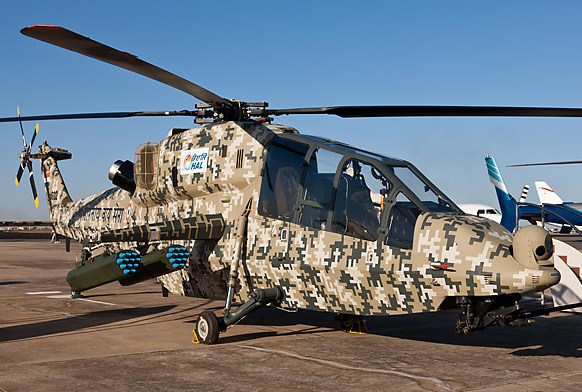
The HAL Light Combat Helicopter (LCH) is a multirole combat helicopter being developed in India by Hindustan Aeronautics Limited (HAL) for use by the Indian Air Force and the Indian Army.


File:LCH TD2 Front.jpg


Development

    In 2006, HAL announced its plans to build a LCH. Funds for the design and development of the LCH to meet the requirements of the Indian Army and the Indian Air Force were sanctioned in October 2006.

   The LCH is a derivative of the HAL Dhruv, which was inducted into the Indian armed forces. Using a successful and proven helicopter as the base platform is expected to conserve the project costs for the LCH, which is pegged at Indian Rupee symbol.svg8.76 billion (US$194.5 million). The LCH was expected to be ready for the Initial Operational Clearance (IOC) by December 2010 with the Final Operational Clearance (FOC) in 2011. However, the revised timeframes hold that the 5.5-tonne LCH should be ready for induction into IAF by 2012-2013.

   The first prototype of LCH completed its first ground run on February 4. HAL has a firm order to deliver 65 LCH to the IAF and 114 to the Army.

   HAL has performed the maiden flight of its indigenously designed and developed LCH. The first Technology Demonstrator (TD-1) of the LCH flew the 20 minute flight from HAL's Helicopter Complex, Bangalore on 29 March 2010. This flight provided an opportunity to carry out low speed, low altitude checks on the systems on-board. The crew reported that the performance of the helicopter and systems was satisfactory.

    The LCH is being designed to fit into an anti-infantry and anti-armour role and will be able to operate at high altitudes (16,300 feet). HAL hopes to equip the Indian Air Force with about 65 gunships. The helicopter is powered by the HAL/Turbomeca Shakti turboshaft engine. The helicopter will be equipped with helmet-mounted targeting systems, electronic warfare systems and advanced weapons systems.

    In 2006, HAL selected the M621 cannon incorporated in a Nexter THL 20 turret for the gun armament of the helicopter, operated by a helmet mounted sight. Three prototypes will be built. The second version will be fitted with weaponry before its test flight. The Indian Air Force will be provided with the third prototype for user trials.

    The LCH is to have a glass cockpit with multifunction displays, a target acquisition and designation system with FLIR, Laser rangefinder and laser designator. Weapons will be aimed with a helmet mounted sight and there will be an electronic warfare suite with radar warning receiver, laser warning receiver and a missile approach warning system.

    The helicopter is to be fitted with a data link for network-centric operations facilitating the transfer of mission data to the other airborne platforms and ground stations operating in the network, facilitating force multiplication.

    With these features, the LCH is expected to play a major role in air defence against slow moving aerial targets, destruction of enemy air defence operations, escort to special heliborne operations, support of combat search and rescue operations, anti-tank role and scout duties.

    The two pilots in the LCH sit one behind the other, compared to side-by-side in the Dhruv. All the flight controls, the hydraulics and the fuel system had to be redesigned for the LCH. The LCH’s many stealth features also necessitated redesigning the fuselage .

Operational history


File:LCH TD2.jpg


     The LCH TD-1 made its first flight on March 29, 2010. The second flight took place on April 28, 2010 at 15:30 hrs. As per HAL Press release, over 20 Test flights have been conducted to check various flight parameters.The third test flight of the LCH was successfully made on 23 May 2010 and it fulfilled the desired parameters and also paves the way for further testing with weapons. As of 17 December 2010 TD-1 had logged 50 hours of flight. The second prototype, which has been weaponized with more sub-systems was unveiled at Aero India 2011 in February 2011. Two more prototypes are under construction to speed up the process of its induction into the Indian Air Force in the year 2012.